
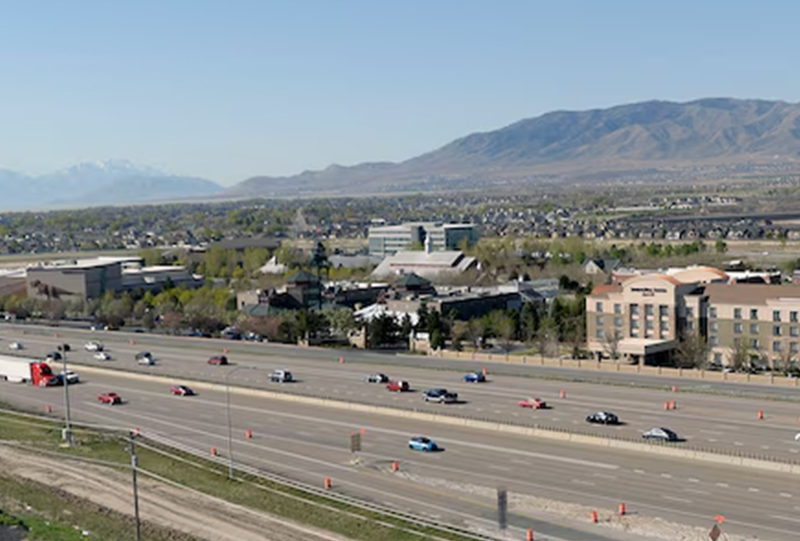
Silicon Slopes 3.0
What You Are Going to Find in this Article
In this deep dive, we move past the sensationalist “tech bust” headlines to explore the maturation of Utah’s tech corridor into Silicon Slopes 3.0. You’ll learn why the seemingly alarming 24% vacancy rate in the Lehi/Draper submarket is actually a “Great Re-shuffling” rather than a collapse. We analyze the pivot from pure-play software to a robust ecosystem of Life Sciences and Professional Services, fueled by anchor entities like MX Technologies and SoFi. For the C-Suite, this is the blueprint for why Utah remains a strategic stronghold for talent and capital in 2026
Silicon Slopes 3.0: Beyond the “Tech Bust”
If you’ve spent any time on LinkedIn lately, you’ve seen the doom-loop narrative: “The Silicon Slopes are sliding.” Skeptics point to the 24% office vacancy in the Lehi/Draper corridor as proof that the party is over. But if you’re sitting in the C-Suite, you know that raw data without context is just noise.
What we are witnessing isn’t a bust; it’s a re-skinning.
From “Code-Only” to “Cures and Capital”
The Silicon Slopes 2.0 era was defined by the “Unicorn Hunt”—growth at all costs, fueled by cheap VC debt and a “software-will-eat-the-world” mantra. Silicon Slopes 3.0 is different. It’s grounded, diversified, and—frankly—a lot more resilient.
While some pure-SaaS companies have downsized their footprints, a new wave of tenants is moving in. We are seeing a massive absorption of Class A space by the Life Sciences sector. Lab-to-office conversions are the new high-margin play. Companies are realizing that the same infrastructure that supported high-speed server rooms in Lehi is remarkably well-suited for high-tech wet labs and medical innovation.
The Anchor Effect: MX and SoFi
The “health” of a tech hub is often measured by its anchors. In 2026, those anchors aren’t just holding steady; they are evolving.
-
MX Technologies has transitioned from a “fintech startup” to a foundational data-intelligence utility. Their presence in the corridor provides a gravitational pull for professional services—law firms, accounting giants, and consultants—who need to be near the data.
-
SoFi’s recent expansions in Salt Lake County signal a long-term bet on the region’s specialized workforce. When a giant like SoFi doubles down on physical presence, it creates a “halo effect” for the surrounding retail and luxury multifamily developments.
Why 24% Vacancy is a “Buying Opportunity.”
For a savvy executive, that 24% number represents leverage. In 2021, you couldn’t find a contiguous block of 50,000 square feet in Draper if your life depended on it. Today, you can negotiate TI (Tenant Improvement) packages that would have been laughed at three years ago.
We’re seeing “Flight to Quality” in real-time. B-grade office parks are struggling, but the high-spec, amenity-rich builds are being snapped up by engineering firms and healthcare disruptors who want the “cool factor” of a tech campus without the volatility of a Series B startup.
The Verdict
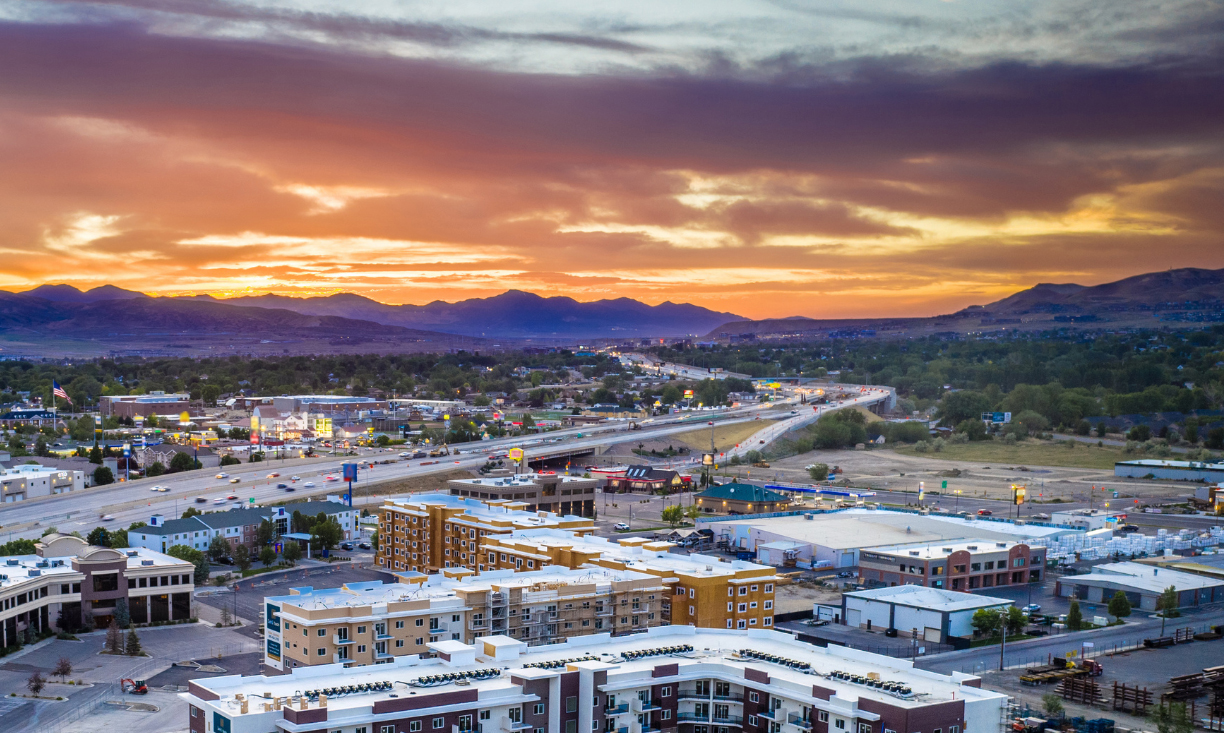
The Slopes aren’t sliding; they’re leveling up. The tech bust “weeded out the garden,” and what’s growing back—Life Sciences, Fintech, and high-end Professional Services—is much hardier. If you’re looking to anchor your operations in a market with a deep talent pool and a government that actually understands TIF (Tax Increment Financing), the Slopes are still the peak.
Silicon Slopes Vacancy: 5 FAQs
-
What is the current net absorption rate of Life Sciences companies in the Lehi/Draper submarket compared to traditional SaaS companies as of early 2026?
As of early 2026, the market is seeing a bifurcation. Traditional SaaS companies are in a “right-sizing” phase, leading to flat or slightly negative net absorption as they trade square footage for efficiency. Conversely, the Life Sciences sector (BioHive) has seen a 31% increase in leasing activity year-over-year. While tech vacancy sits at 24%, the high-spec lab and R&D spaces are being absorbed almost as fast as they can be converted or built, with vacancy in that niche remaining below 10%. -
How do the 2026 office lease concessions in Utah’s Silicon Slopes compare to other Western tech hubs like Austin or Phoenix?
Utah remains more resilient than its Sunbelt peers. While Austin is struggling with an oversupply leading to a 27.4% vacancy rate and aggressive concessions (often 12–18 months of free rent on 10-year terms), Silicon Slopes (24% vacancy) is seeing more moderate concessions. Expect 6–10 months of free rent and significant Tenant Improvement (TI) allowances ($80–$110/sq. ft.) for Class A space. Owners here are prioritizing credit-worthy tenants over high face rents.
-
Analyze the impact of MX Technologies and SoFi on the ‘professional services’ real estate demand in Salt Lake County over the last 24 months.
The expansion of anchors—specifically SoFi’s recent addition of 410 high-paying jobs and MX’s shift toward data infrastructure—acts as a “gravity well.” Every 100 fintech jobs created in the corridor typically generates demand for roughly 15,000–20,000 sq. ft. of secondary professional service space (legal, accounting, and compliance). We are seeing a 12% uptick in “boutique” office demand in Cottonwood Heights and Draper from firms that exist solely to service these two giants.
- What are the typical costs and structural requirements for converting a Class A office building in Draper, Utah, into a life science lab space?
Converting a Class A office to “wet lab” space in Utah currently costs between $350 and $600 per square foot, depending on the specialized equipment needed. This is a significant premium over standard office fit-outs but represents a 30–40% savings compared to ground-up life science construction.
-
Key Requirements: Upgraded HVAC for 10–12 air changes per hour, reinforced floor loading (100–150 lbs/sq. ft.), and dedicated backup power for sensitive samples.
-
- How is the ‘Point of the Mountain’ redevelopment in 2026 affecting the long-term vacancy forecasts for the Silicon Slopes office corridor?
The 600-acre redevelopment of the old state prison site (“The Point”) is the most significant supply-side catalyst in a decade. While it adds millions of square feet over its multi-phase rollout, the $100M Convergence Hall (an innovation hub) is expected to lower vacancy in the surrounding submarket by 2027 by attracting net-new international tenants. However, older “commodity” office parks in Lehi that lack transit-oriented amenities may see their vacancy rates climb as tenants migrate toward this new “Downtown Silicon Slopes.”
Related Posts











Recent Works


